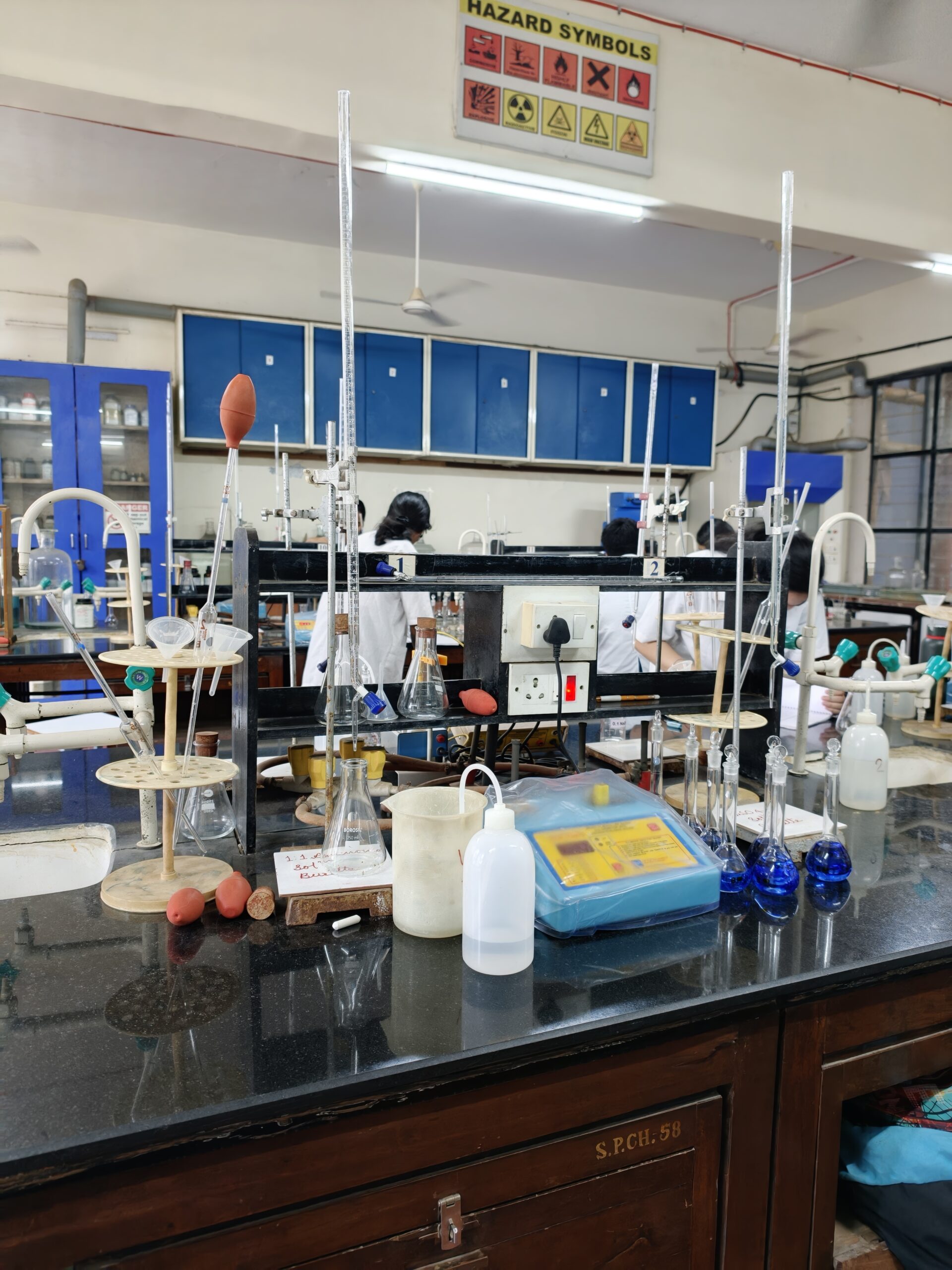
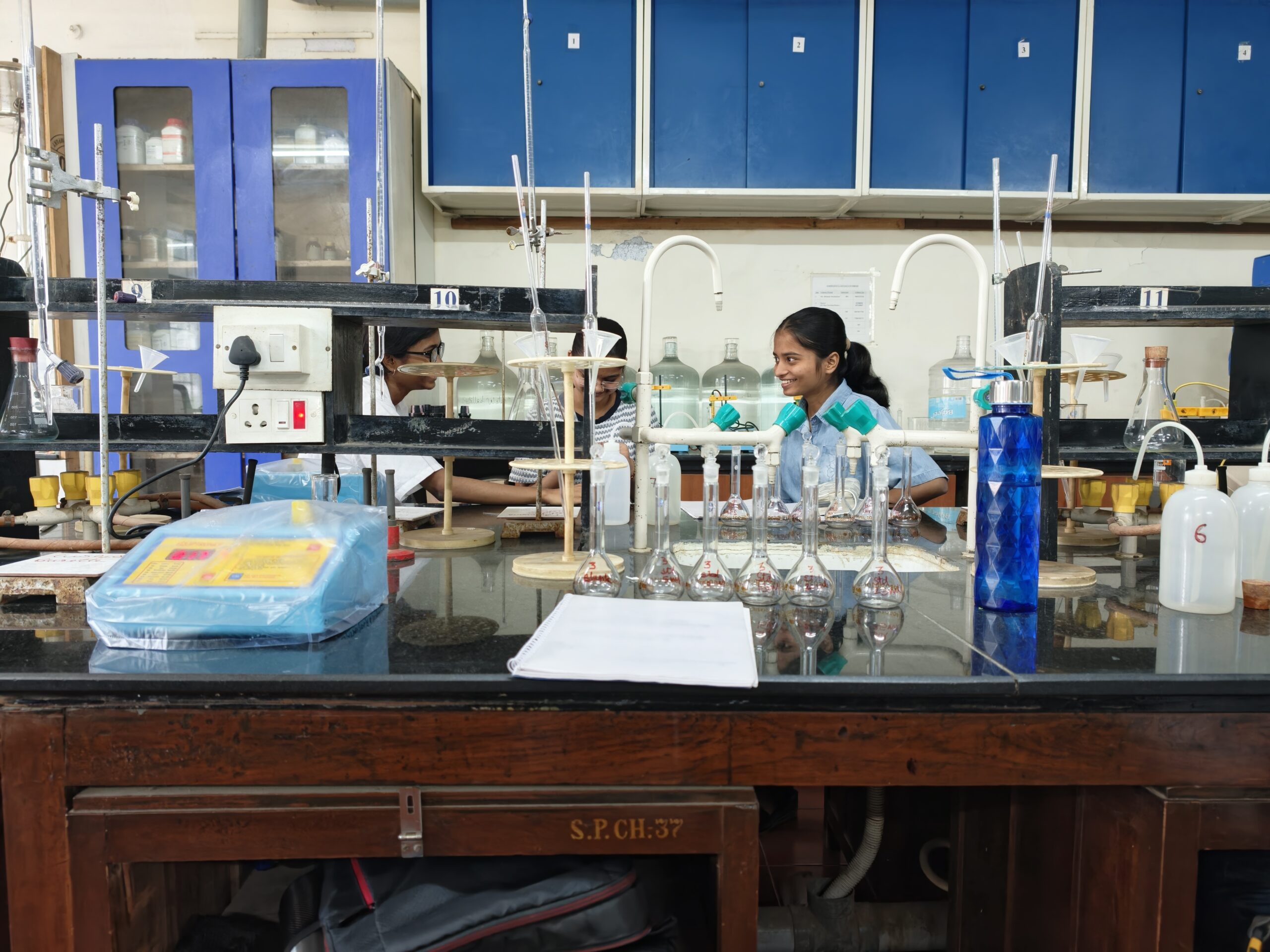
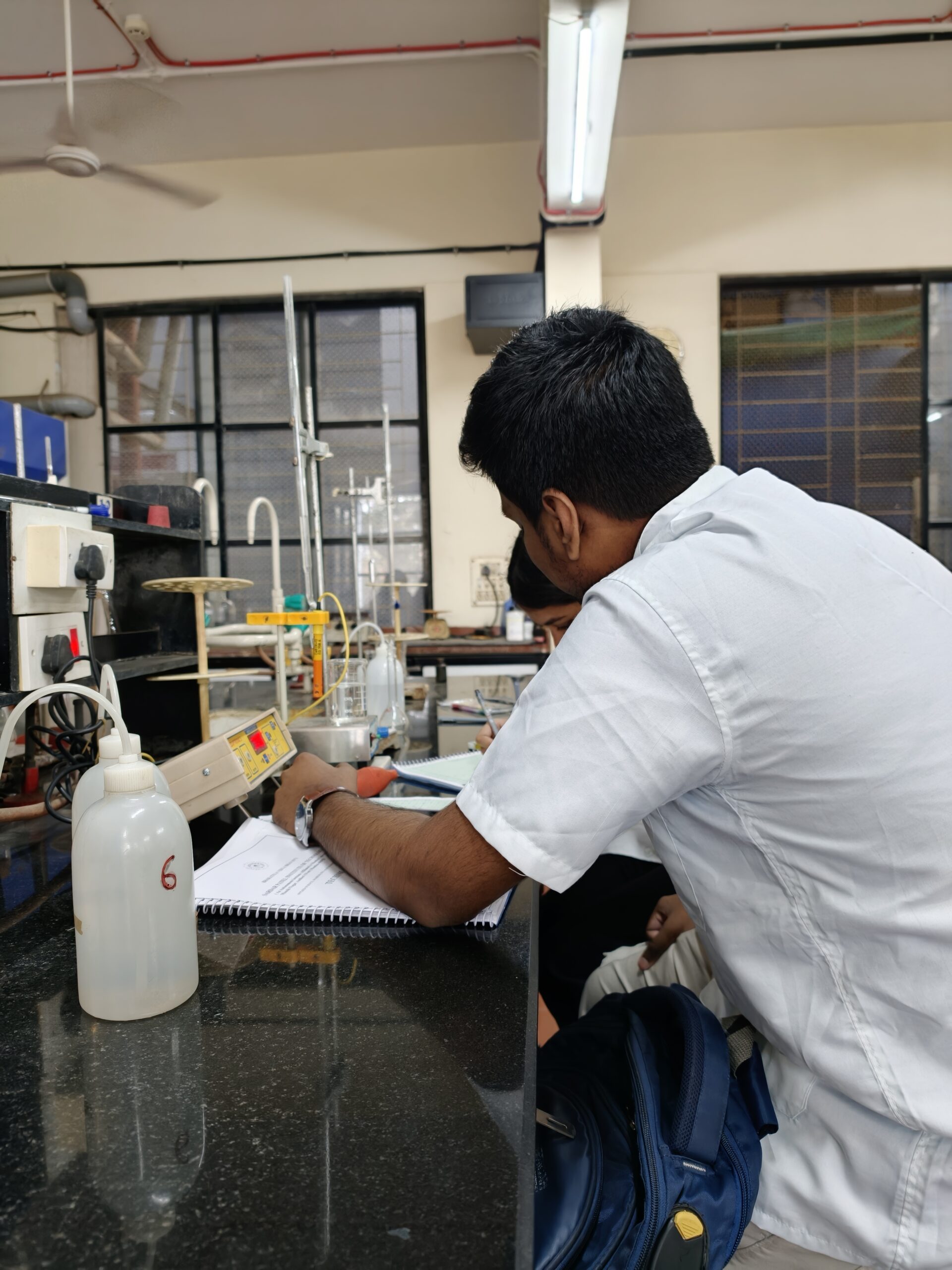
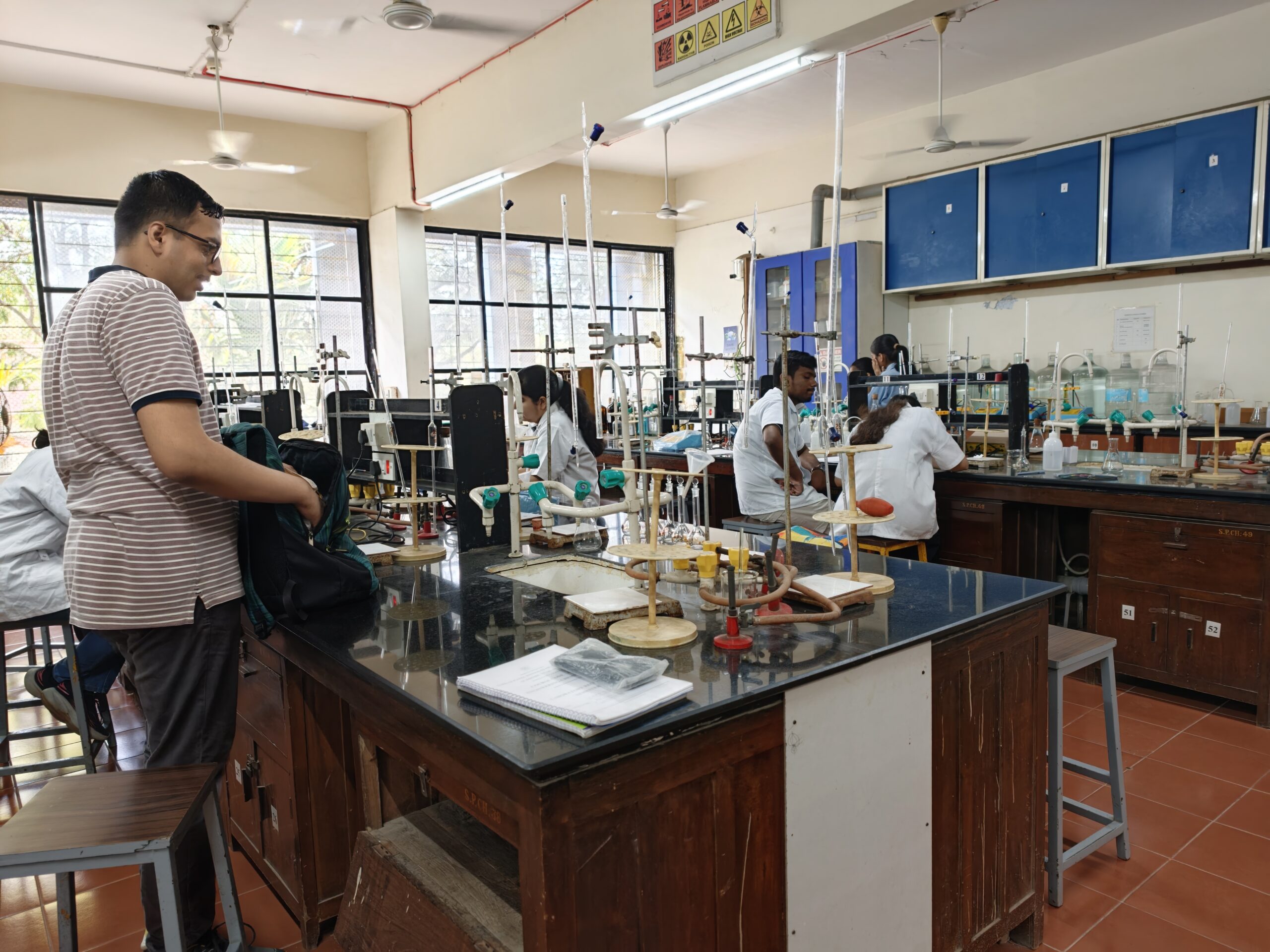
Engineering Chemistry Lab
List of Experiments:
- Estimation of total hardness in water sample
- Removal of hardness using ion exchange column
- Redwood viscometer no 1
- Abel’s flash point apparatus
- Determination of acid present by conductometry
- Determination of strength of acid using pH meter
- Determination of COD of wastewater
- Estimation of copper in brass using Iodometry
- Flue gas analysis by Orsat apparatus
- Estimation of Fe (II) potentiometry
- Estimation of Cu(II) using colorimetry
Instruments and Equipment:
- Lab Oven MIC-165 – Quantity 1
- Hot plate round – Quantity 4
- Heating Mantle – Quantity 2
- L.G. Refrigerator (A-80) 205 KLG5ADG. Chasisi no. 202 NRKA 0893, 190 Ltr, 5 Star rating – Quantity 1
- Digital Analytical Balance – Quantity 1
- Conductivity meter, Microcontrolled based with cells (1.0CC to 0.1CC)and temperature probe – Quantity 1
- Magnetic stirrer to mix watery liquid provided with soft start and restart facility speed upto 1000 RPM. Provided with S.S. Top and teflon magnetic bit. Capacity 500 ml Size 100 X 125 X 60 mmHt. HSN code 84798200 – Quantity 8
- Digital pH meter with electrode and with Instruction manual – Quantity 4
- Potentiometer Digital EQ-602 – Quantity 4
- pH cum conductivity meter EQ-635 – Quantity 4
- Colorimeter Digital EQ 650 – Quantity 4
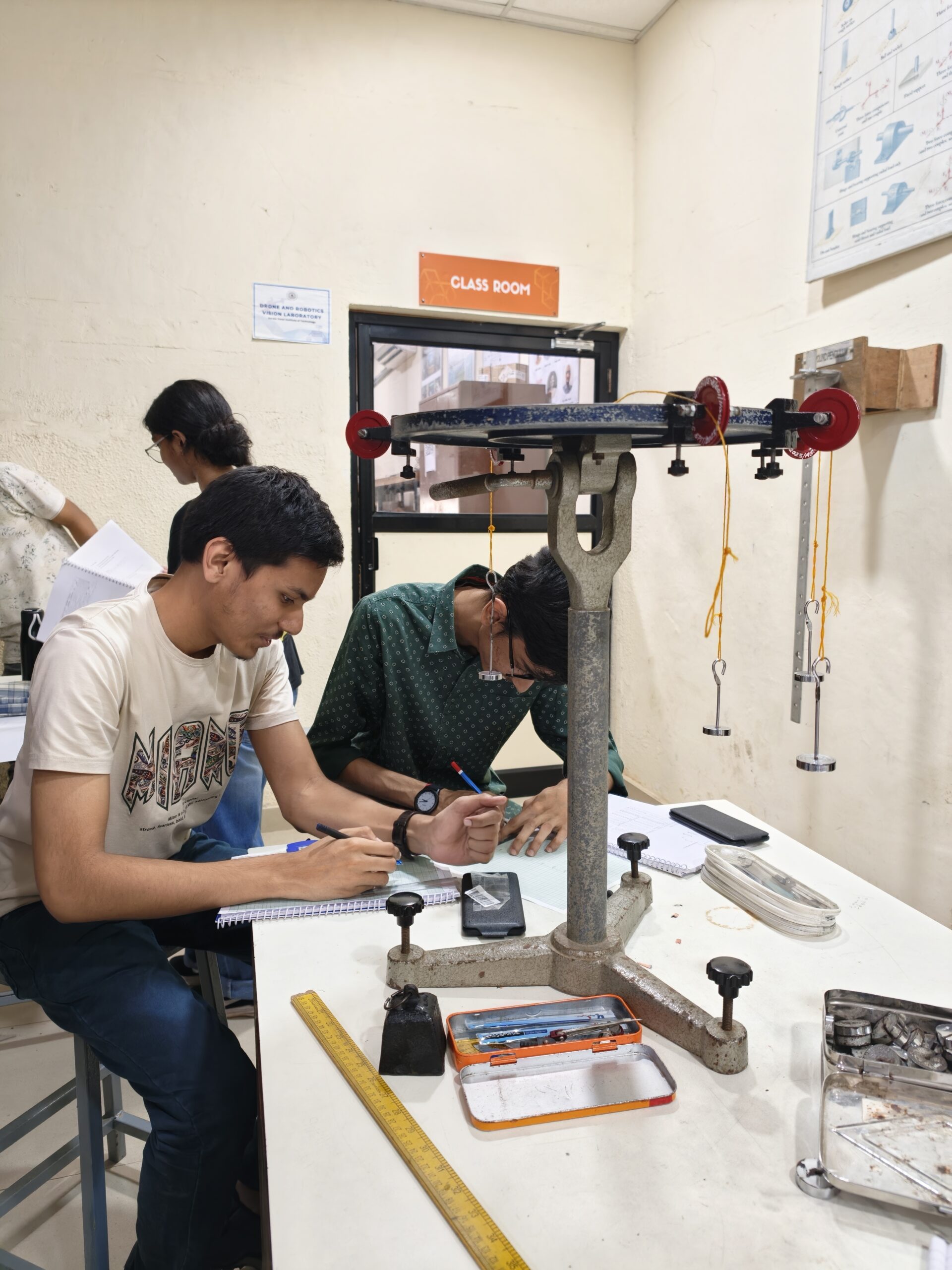
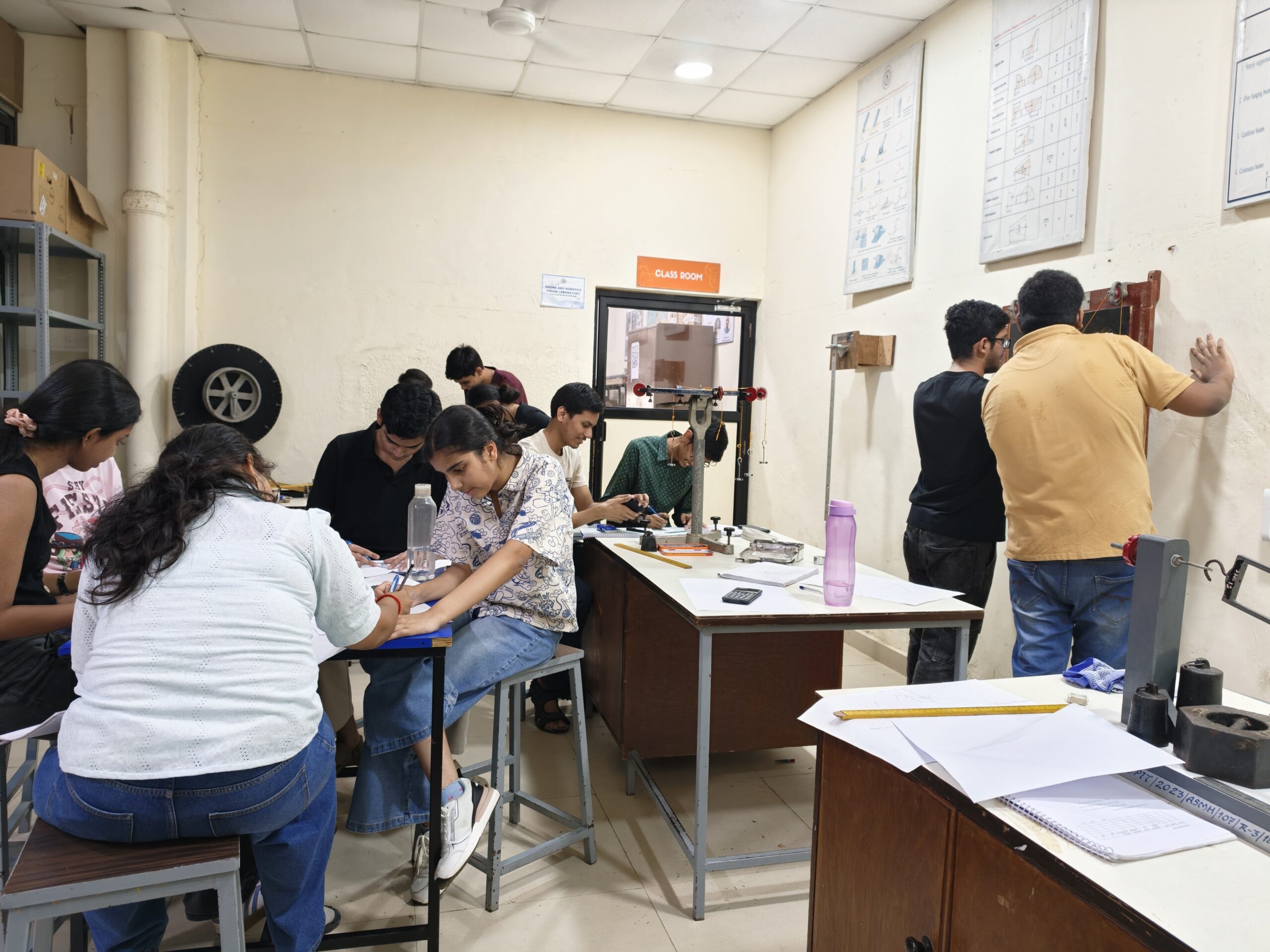
Engineering Mechanics Lab:
List of Experiments:
- To study the Law of Polygon of Forces for a concurrent and coplanar force system using a Universal Force Table.
- To study Conditions of Equilibrium for a parallel force system by the Beam Reaction apparatus.
- To study the principle of Moment by using Bell Crank Lever.
- To study the Lami’s Theorem with the help of the Jib Crane apparatus.
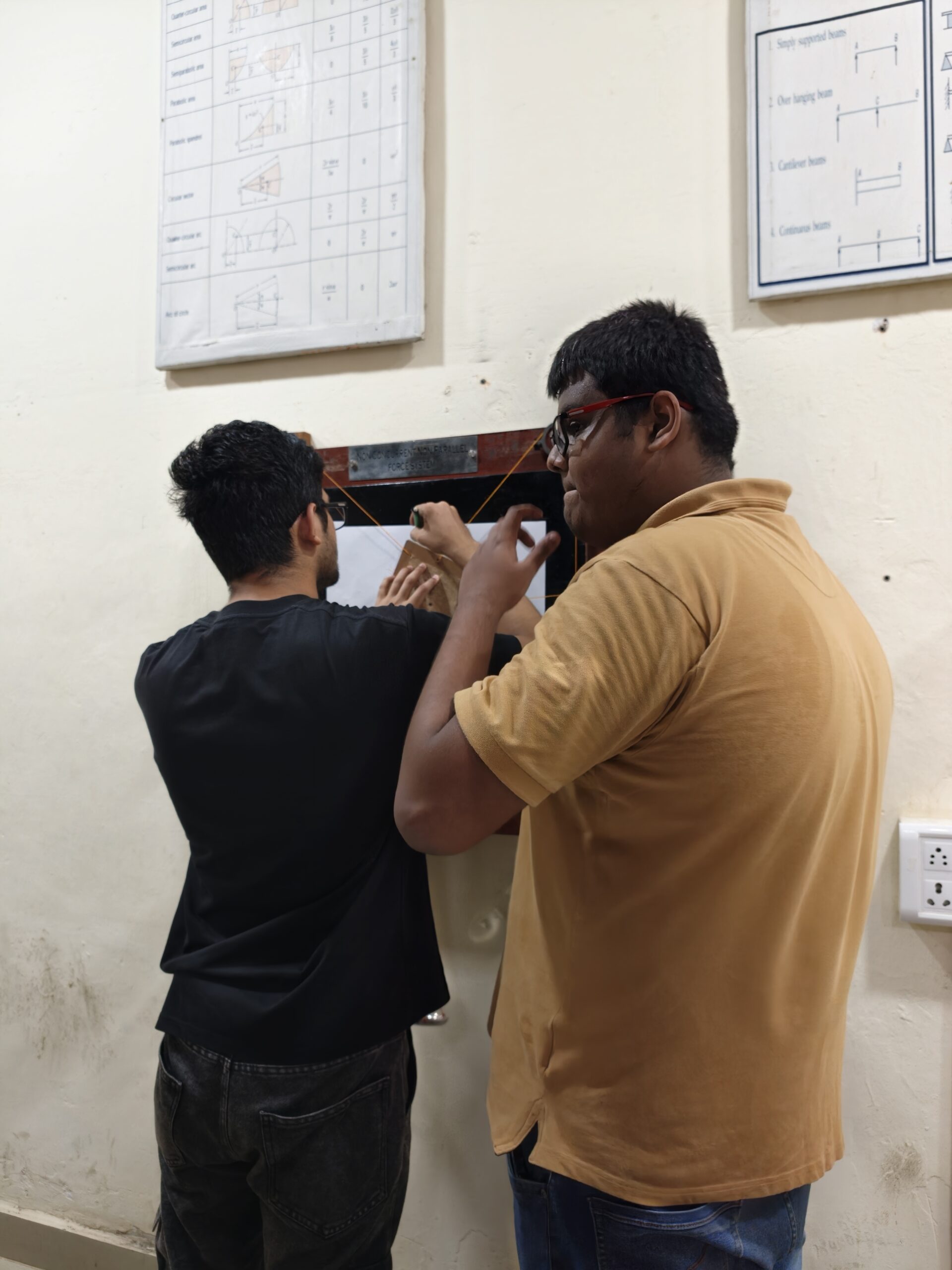
- To study the Conditions of Equilibrium for a non-concurrent and non-parallel force system.
- To determine the Coefficient of Friction for metal, wood and glass slab at impending motion.
- To study Acceleration due to Gravity by Bar Pendulum Apparatus.
- To study Projectile Motion.
Instruments and Equipment:
- Universal Force Table – Quantity 1
- Parallel Force Apparatus Overhang Beam Type- Quantity 1
- Bell Crank Lever- Quantity 1
- Simple Jib Crane Apparatus- Quantity 1
- Link Polygon Apparatus- Quantity 1
- Friction Slide Apparatus with Inclined Plane – Quantity 1
- Bar or Compuond Pendulum- Quantity 1
- Projectile motion experiment- Quantity 1
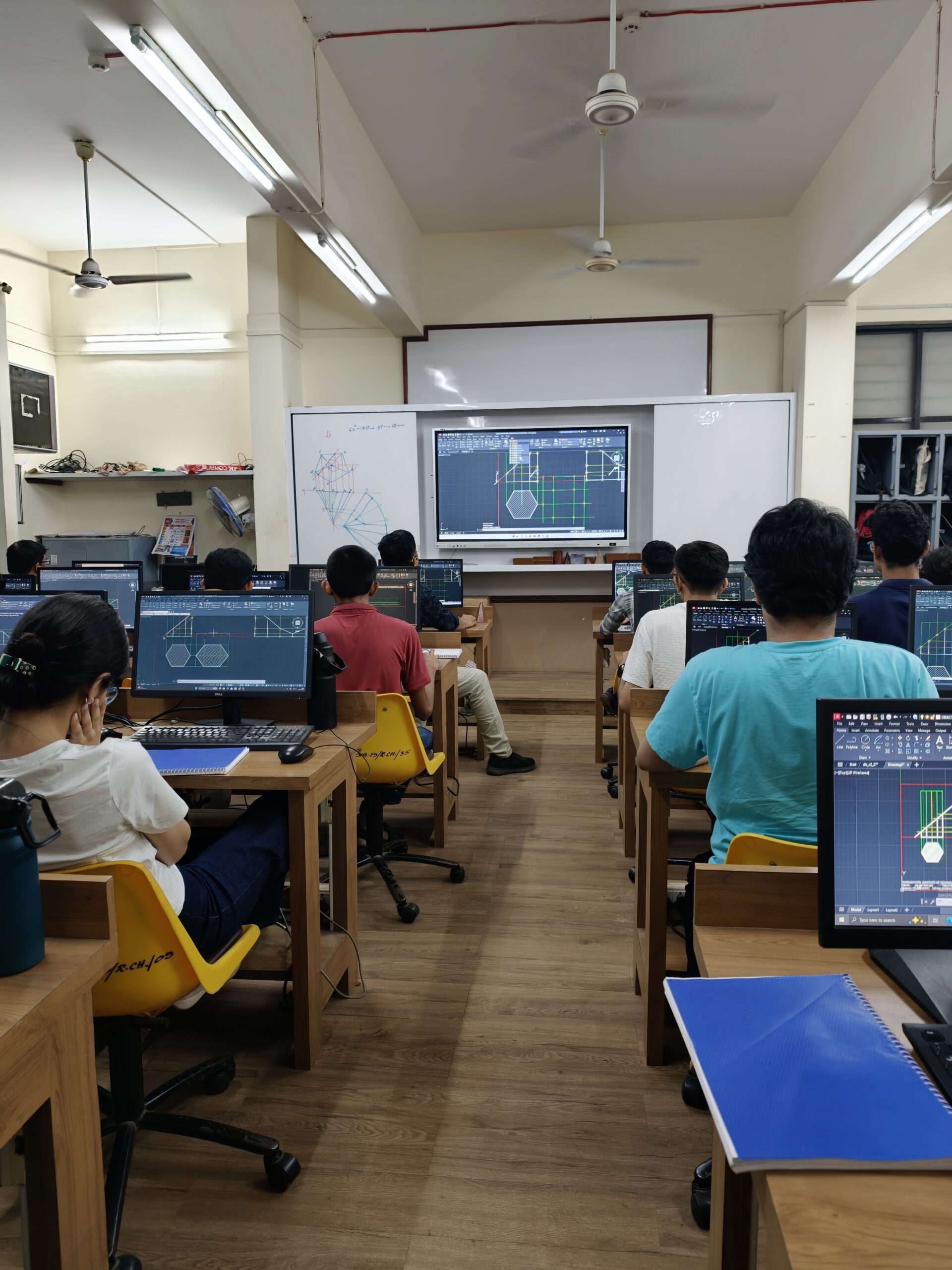
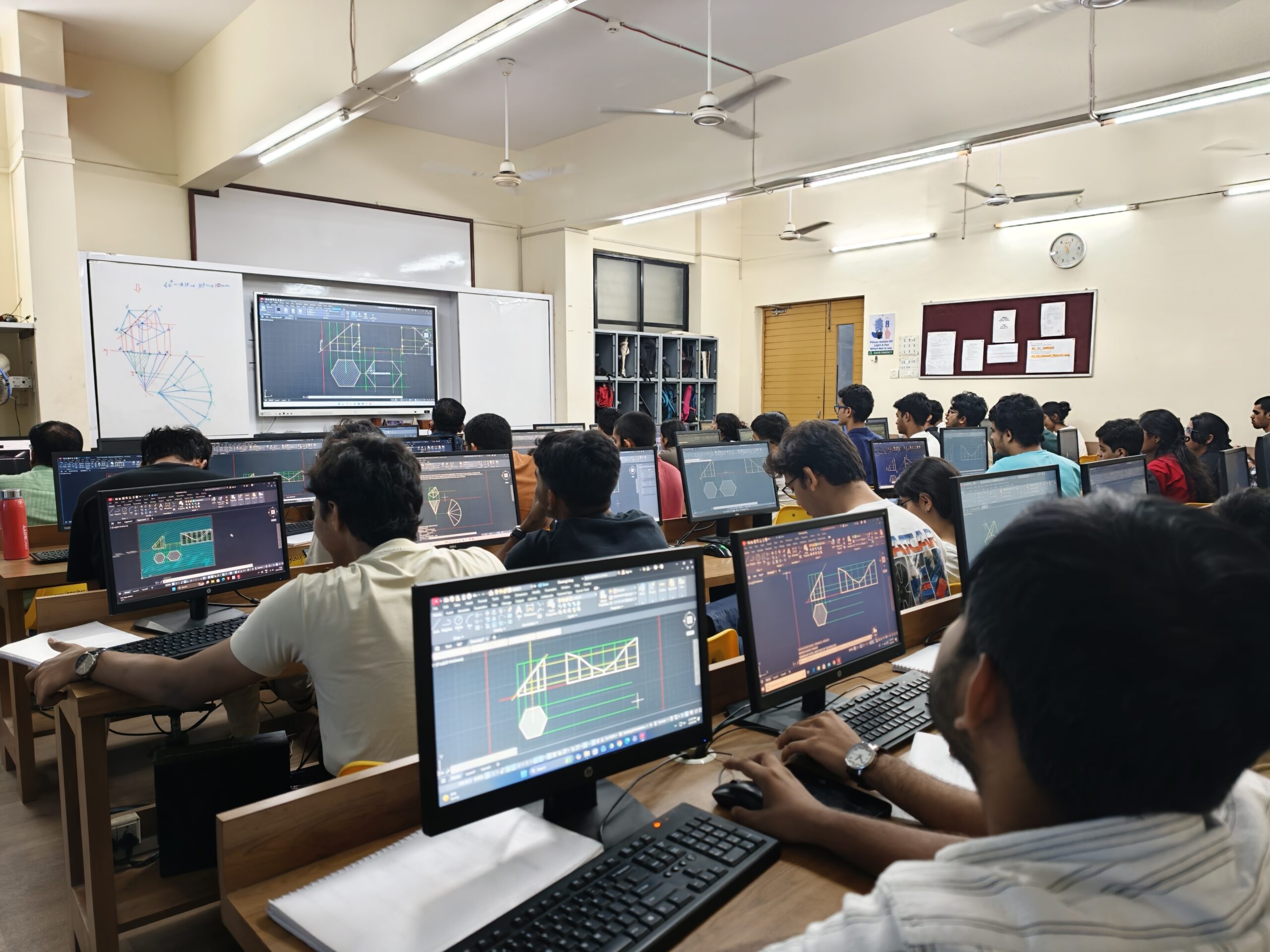
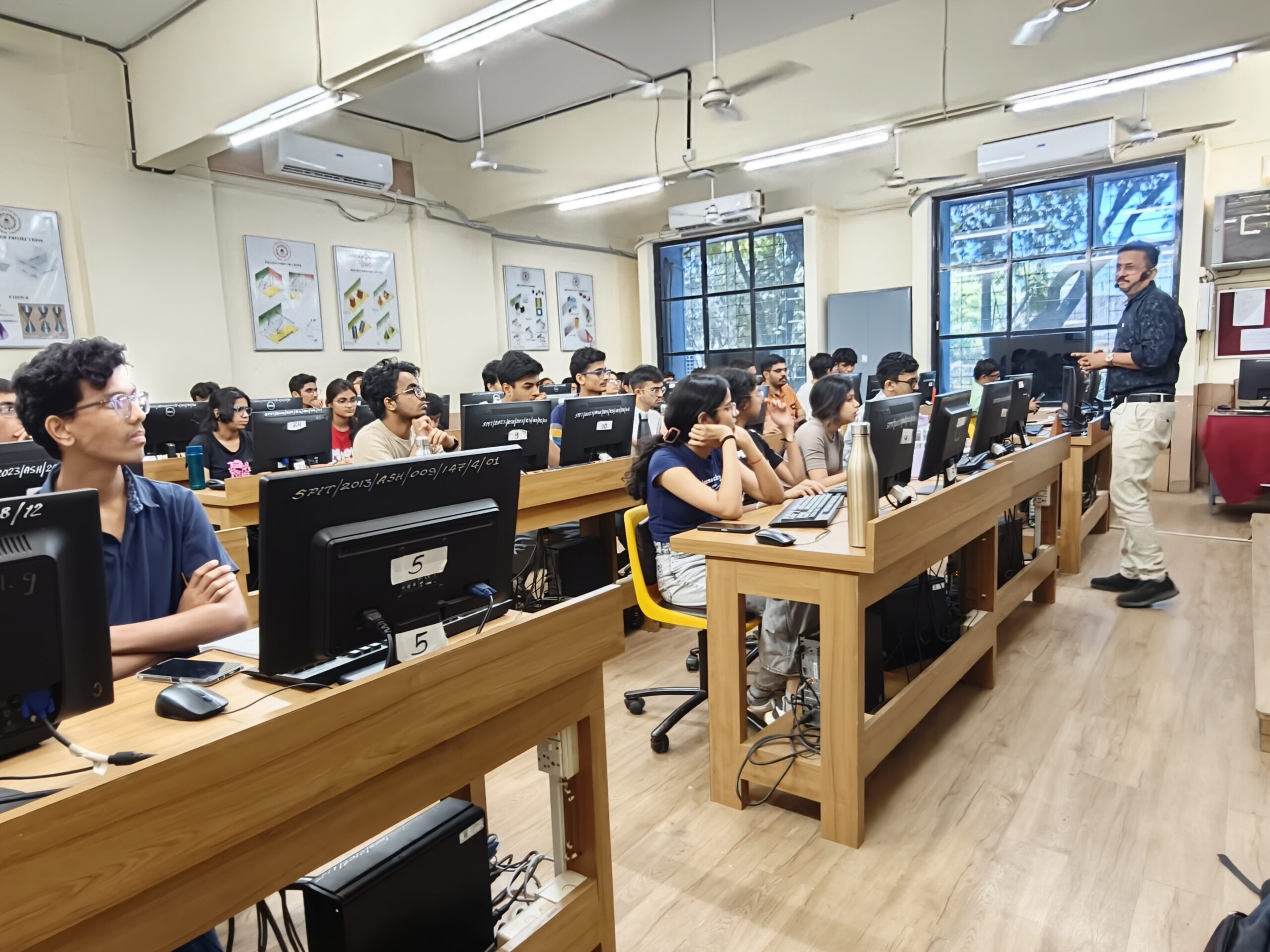
Engineering Graphics/AutoCAD Lab
List of Experiments and Focus Sessions:
- Introduction to Auto-CAD: -Basic Drawing and Editing Commands.
- Auto-Cad Practice sheet
- Introduction to Orthographic projections
- Orthographic projections sheet
- Introduction to Sectional Orthographic projections
- Sectional Orthographic projections sheet-2 (Two Problems)
- Introduction to Isometric Projection/View
- Isometric Projection/View sheet-2 (Two Problems)
- Draw development of lateral surface of solids with simple sections((Prism and Cylinder.
- DLS sheet-2 (Pyramid and Cone)
Instruments and Equipment:
- Desktop specifications: Dell Optiplex 300 SFF Desktop Core i5 / 16 GB RAM / 512 GB SSD (with 10.5″ LED Monitor, 5-Year Warranty) or equivalent, 70 nos
Software: Autodesk AutoCAD 2026 (Educational License)
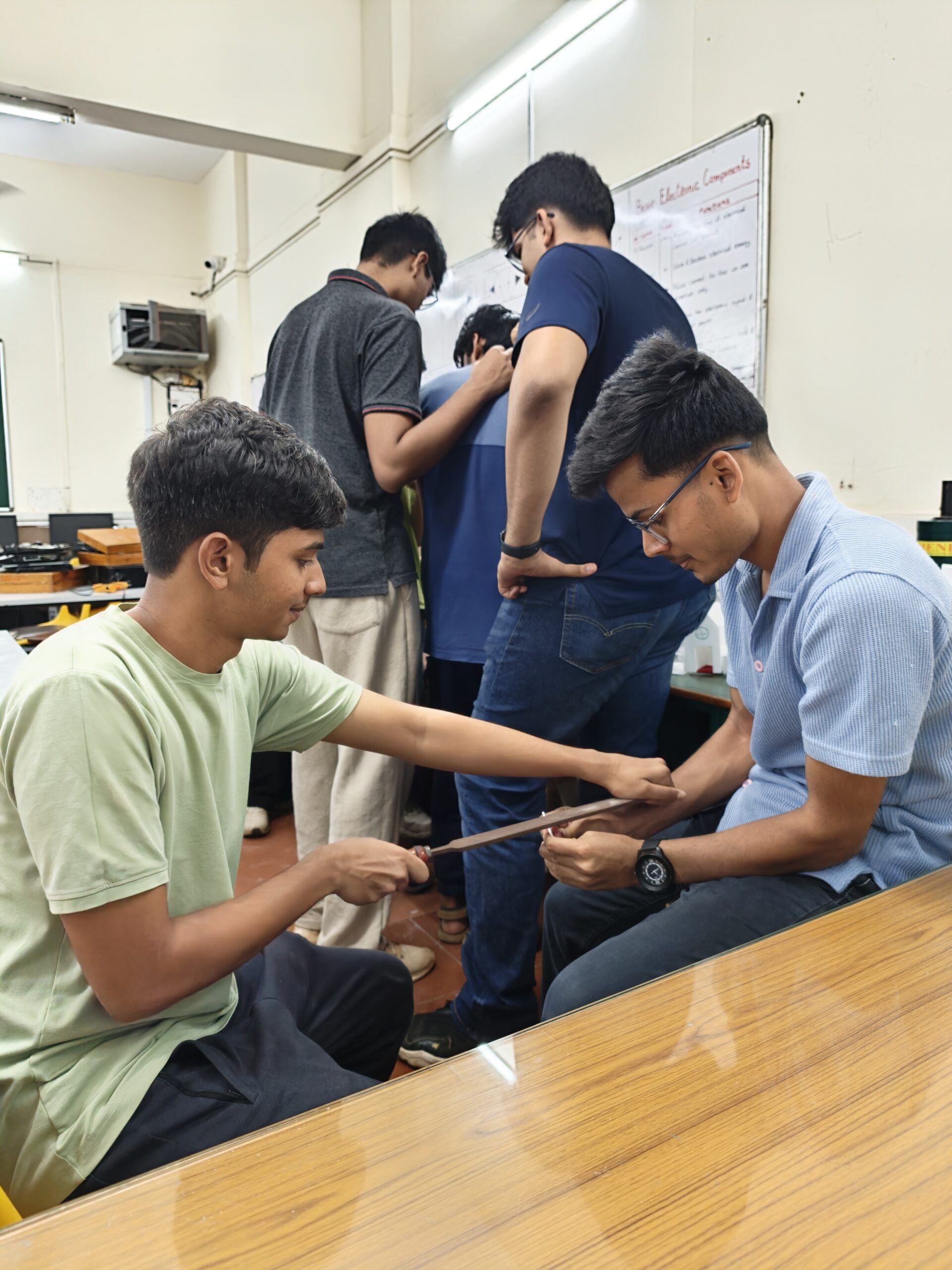
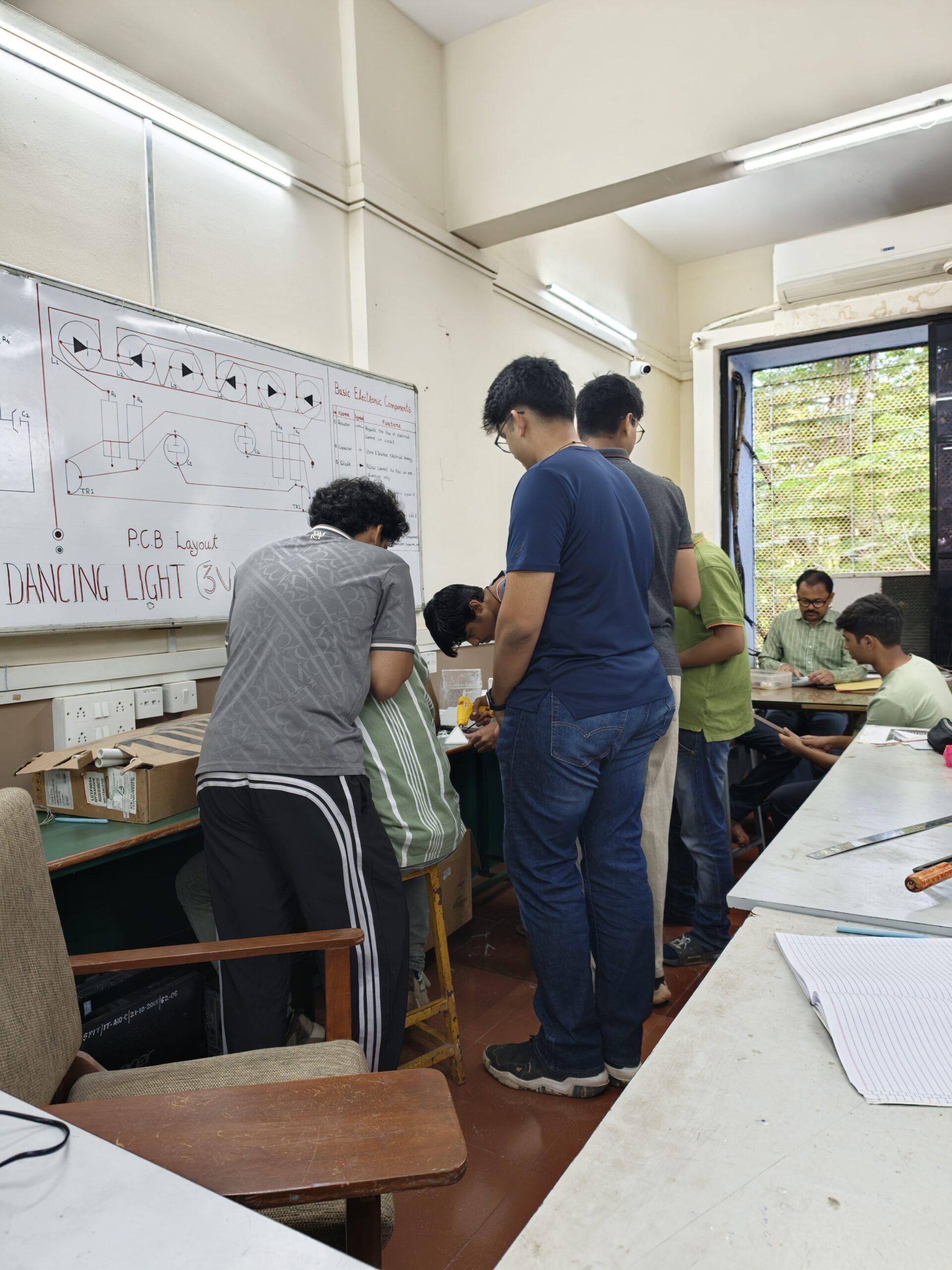
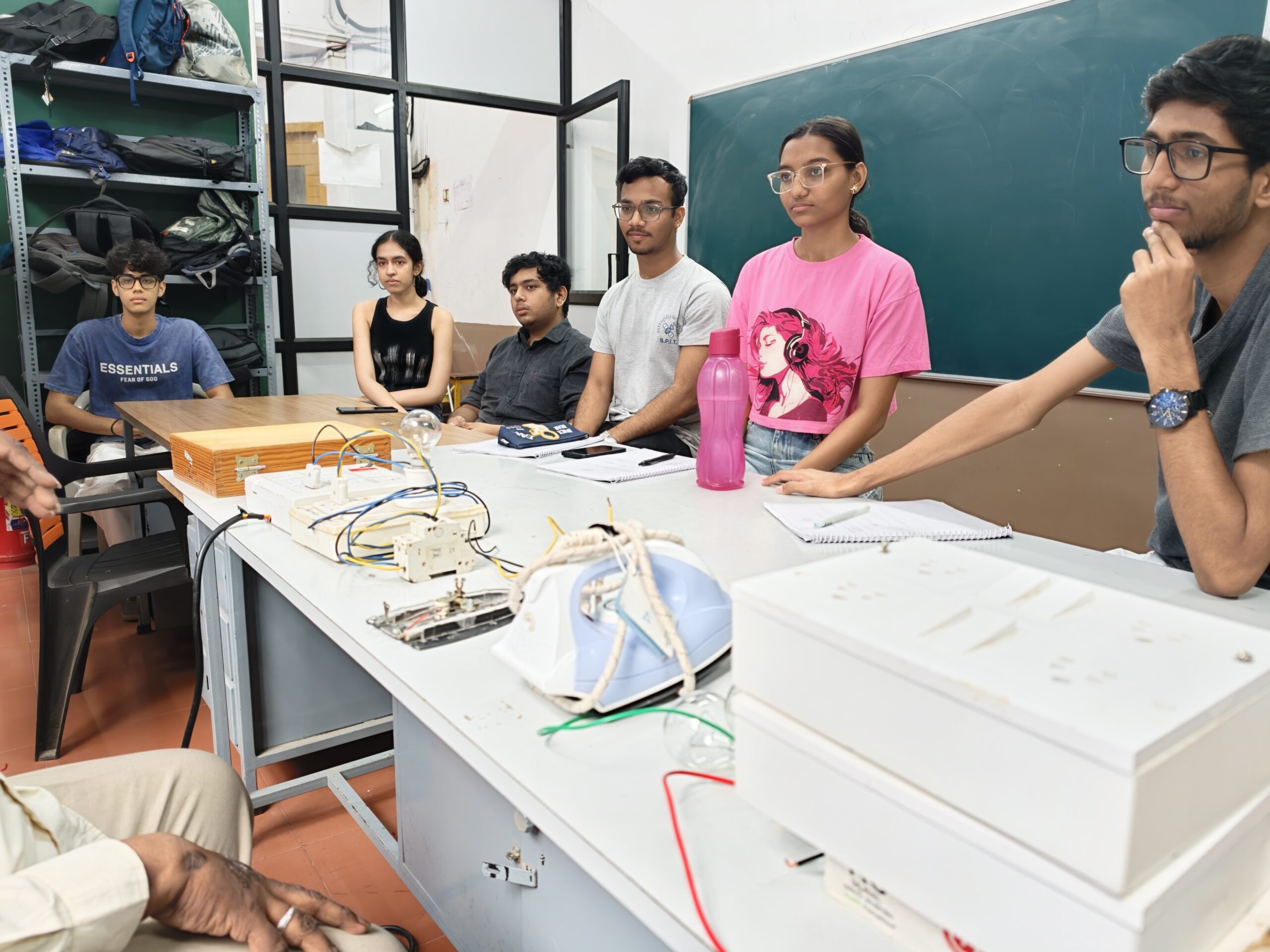
Tech Shop
List of Trades:
- Computer Hardware & Networking
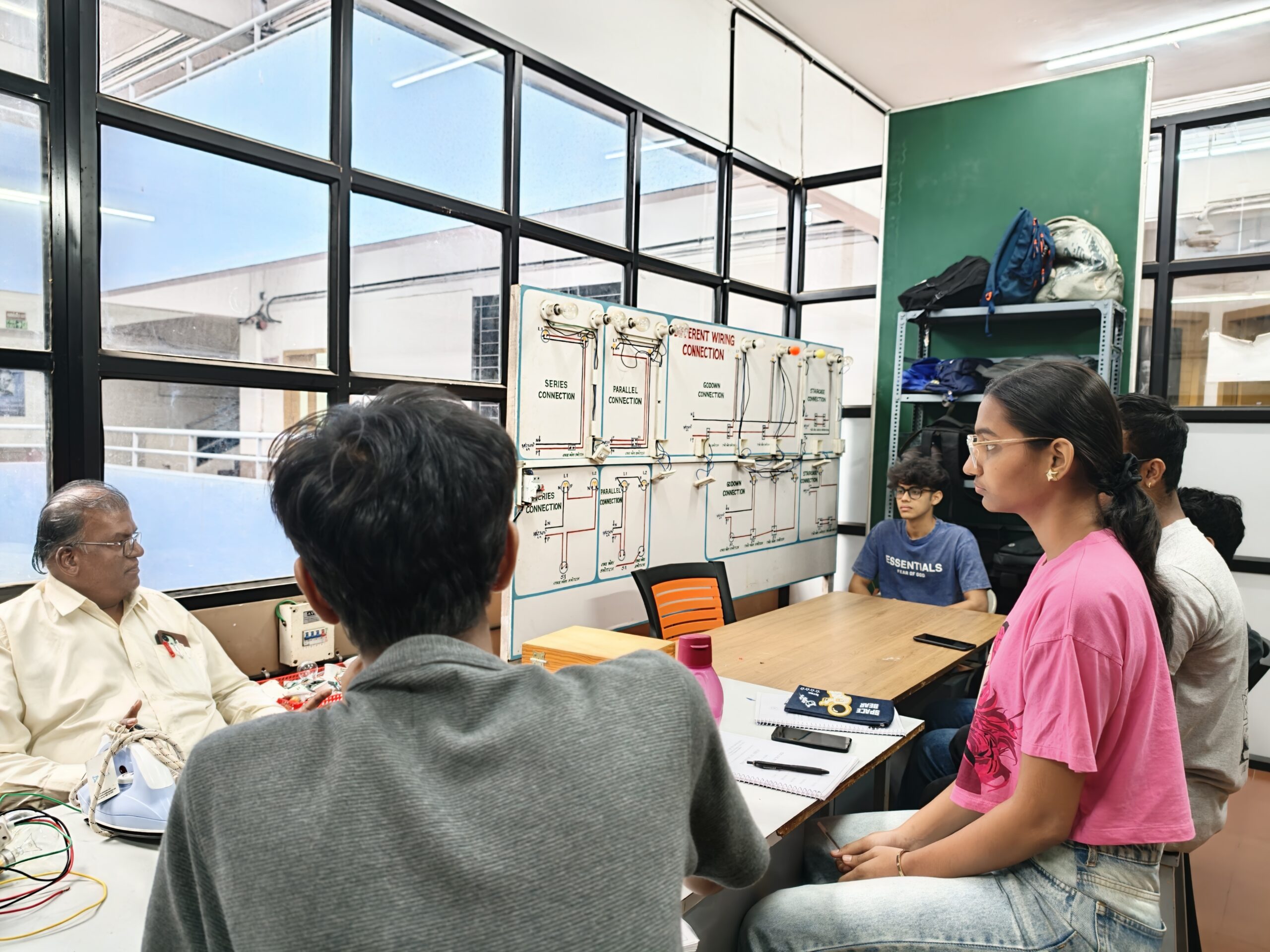
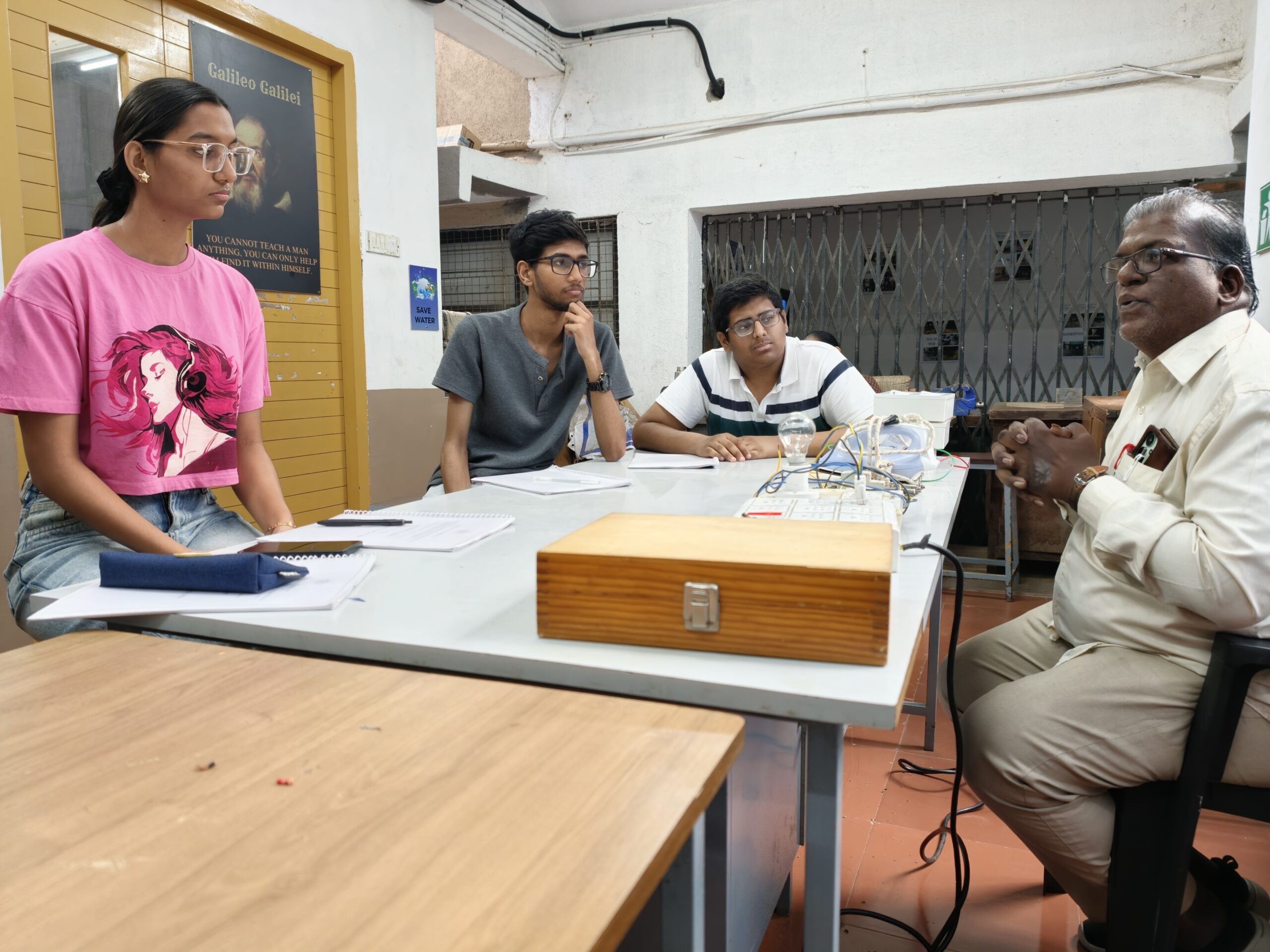
- Electrical House Wiring & Gadgets
- Printing Circuit Board
- Acrylic Exercise
- 3D Modeling & Printing
- Modern Plumbing
- IDEA Lab Demonstration
- Make a Product
Instruments and Equipment:
- Welding machine – Opuatio Make
- Bench grinder – Elmaco
- Bench type drill machine – KMP
- Verner caliper – Mitatoya
- Wood lathe machine
- Vernier hight gauge
- Wood hand cutter
- Hand drill machine
- Ultimaker2+ (3D Printer) – Ultimaker
- PCB Drill Machine – Phenix
- PCB Etching machine – Phenix
- Spot welding machine – Bharat Make
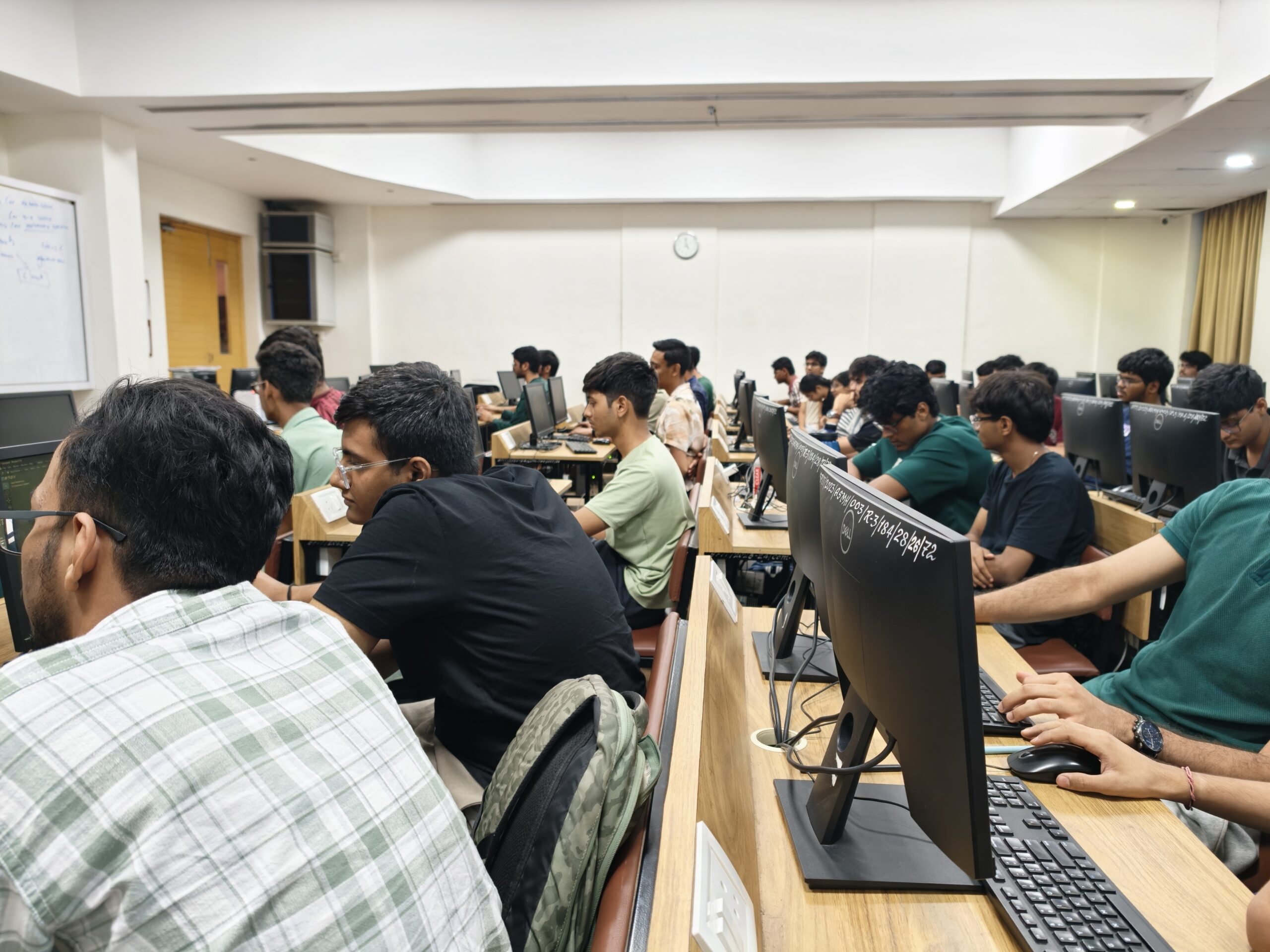
Computer Programming and 3D Modeling Lab:
PSOOP Lab Experiments:
- Setup a project in BlueJ IDE, project structure,IDE tour,Compiling a simple program and running the program.
- JAVA Command line arguments ,Read Data from the Keyboard,Constants,Variables and Data Types, Symbolic Constants and Type Casting.
- Operators precedence and Expressions,Arrays(One Dimensional,Arrays(Two Dimensional),Strings,Strings (StringBuffer class).
- Wrapper Class,Wrapper Class(Autoboxing, Unboxing),Decision making and branching – if – else , statement, switch,while, do-while,for,break, continue.
- Classes, Objects and Methods, Creating Objects, Accessing class members, Constructors.
- Method Overloading ,Static Members ,Inheritance:Extending a Class(Single Inheritance).
- Inheritance:Multilevel Inheritance ,Inheritance:Hierarchical Inheritance Overriding methods (Dynamic or runtime polymorphism) Final variables and methods and classes.
- Abstract Methods and Classes ,Visibility Control (Access Modifiers) Inheritance:Multiple Inheritance (Interfaces).
- Multiple Inheritance (Implementing Interfaces) , Multiple Inheritance (Extending Interfaces) ,Multiple Inheritance (Extending and Implementing Interfaces).
- Errors and Exceptions ,Errors and Exceptions (try-catch-finally)
PSIPL Lab Experiments:
- Variables, keywords, Data types, Operators: Arithmetic, Relational and Logical, Assignment, Unary, Conditional, Bitwise, Expression, Statements.
- Branching Structures: if statement, if-else statement, multi-way ,decision, Iterative Structures: while, do-while, for, nested loops.
- switch statement, continue statement, break statement
- Introduction to Arrays: Declaration, Definition, accessing array,elements, one-dimensional array.
- Two-dimensional array, array of characters, Solving using Arrays like Array Order Reversal, Array Counting or Histogramming.
- Strings and Operations on Strings.
- Defining a Function, accessing a Function, Function Prototype, Passing Arguments to a Function, call by value, pointers and call,by reference.
- Recursion
- Declaration, Initialization, structure within ,structure, Array of Structure, Operation on structures,
- Concept of Union, Difference between structure and union
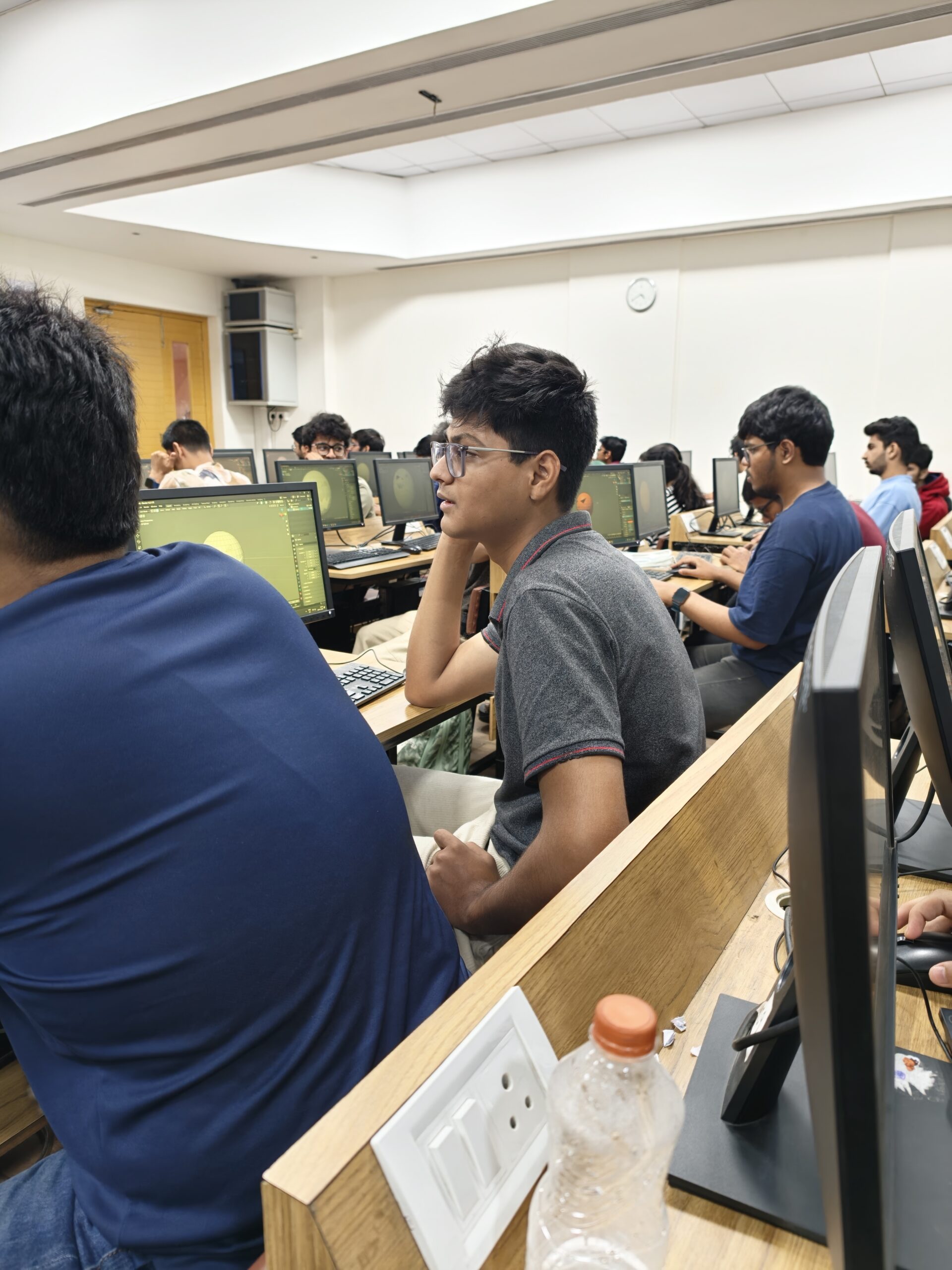
3D Modeling Focus Sessions:
- 2D to 3D modeling techniques with AutoCAD
- Mesh level editing techniques
- Sculpting techniques
- Model preparation for 3D Printing
- 3D Printing Pipeline – Slicing and Troubleshooting
Instruments and Equipment:
- Senses Smart Board – 1
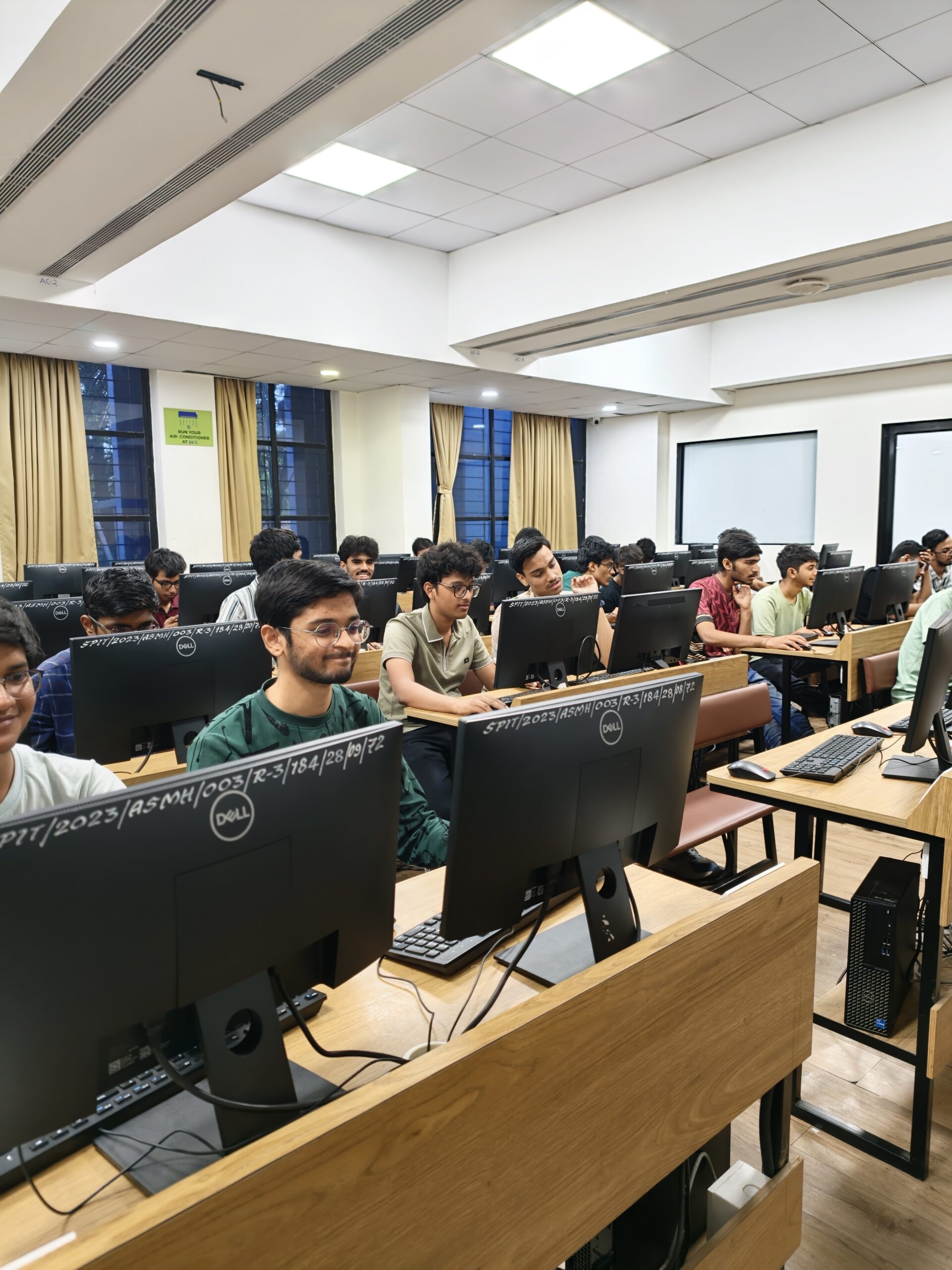
- Computers: Dell Optiplex 3000 running Windows 11 Enterprise, Intel Core i5 @3GHz- 12th Gen, 16GB RAM, 500GB SSD, 20 inch monitor, 80 nos
Software Used :
- BlueJ IDE for PSOOP
- CodeBlocks IDE for PSIP
- Autodesk AutoCAD Educational Version
- Blender
- Ultimaker Cura
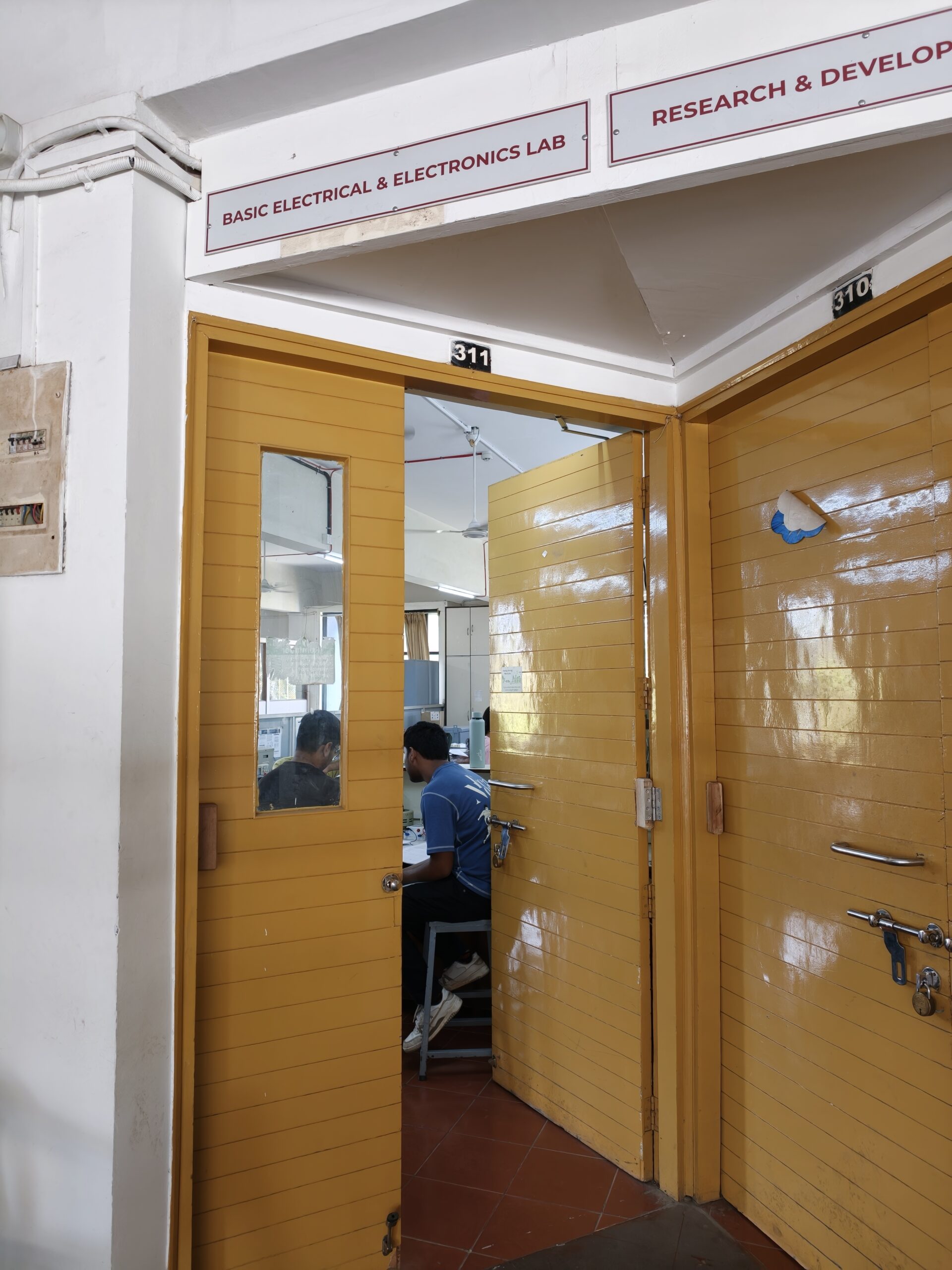
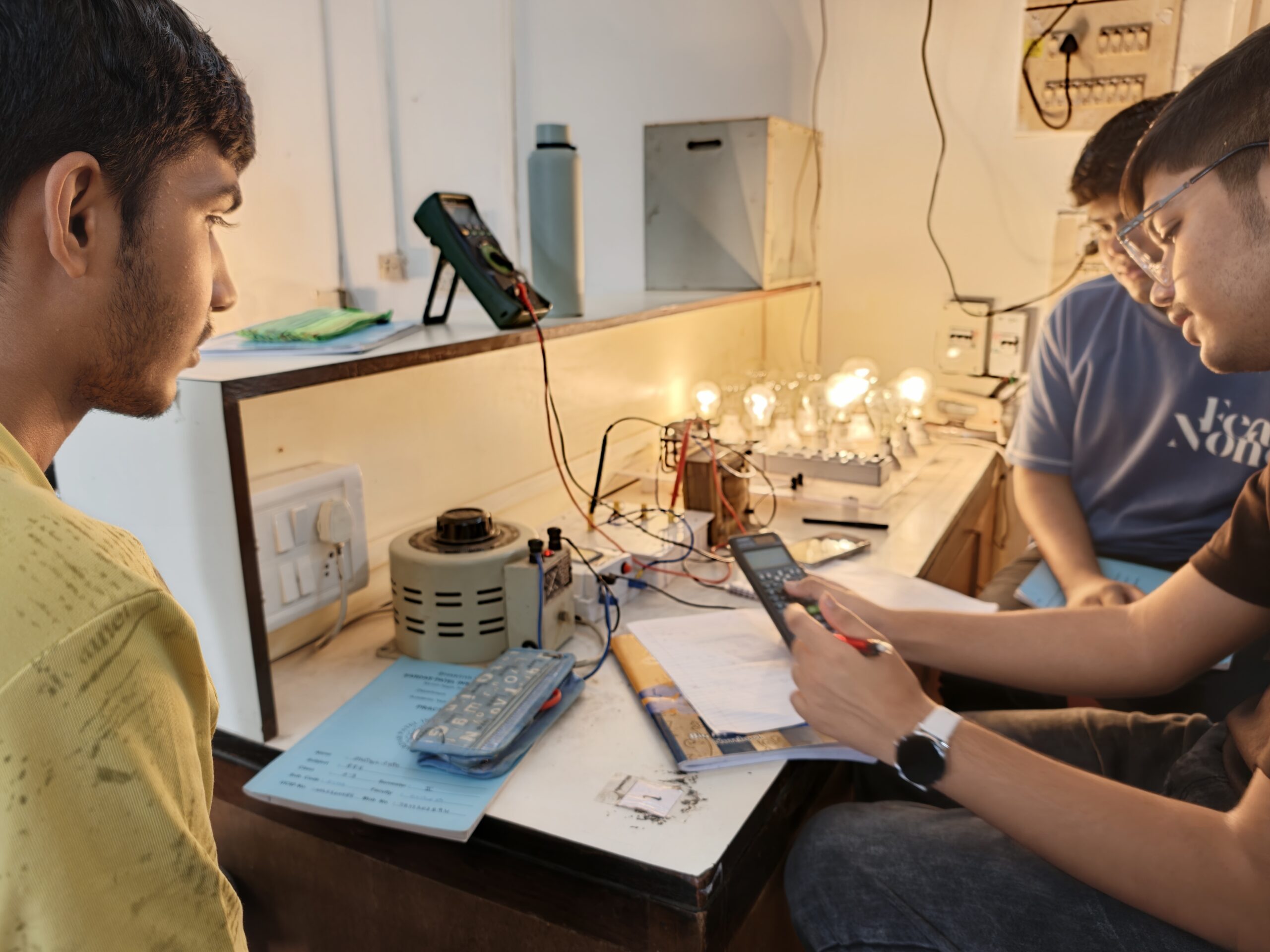
BEE Lab
List of Experiments:
- Introduction to use of measuring instruments and active passive components.
- Verification of Superposition theorem.
- Verification of Maximum Power Transfer Theorem using Thevenin’s and Norton’s Theorem.
- RLC series resonance circuit and measurement of active, reactive apparent power in a given R, L, C circuit.
- Three phase system and three phase power measurement using two wattmeter methods.
- DC transient : RC and LR circuit response.
- Perform Open Circuit Test and Short Circuit Test on 2.5 KVA and 3 KVA transformers.
- Mini Project using the following steps : Sequel software simulation, PCB designing software, Final Hardware
Instruments and Equipment:
DC power supply (0-15V/1A), DC power supply (0-230V, 25A), Digital Storage Oscilloscope, Function Generator, Single Phase and Three Phase Autotransformer, DC Motor, 1 phase induction motor and 3 phase induction motor generator set, 2.5 KVA and 3 KVA rating transformer, DC electronic load, Clamp meter, Digital Wattmeter, Current Transformer, Isolation Transformer
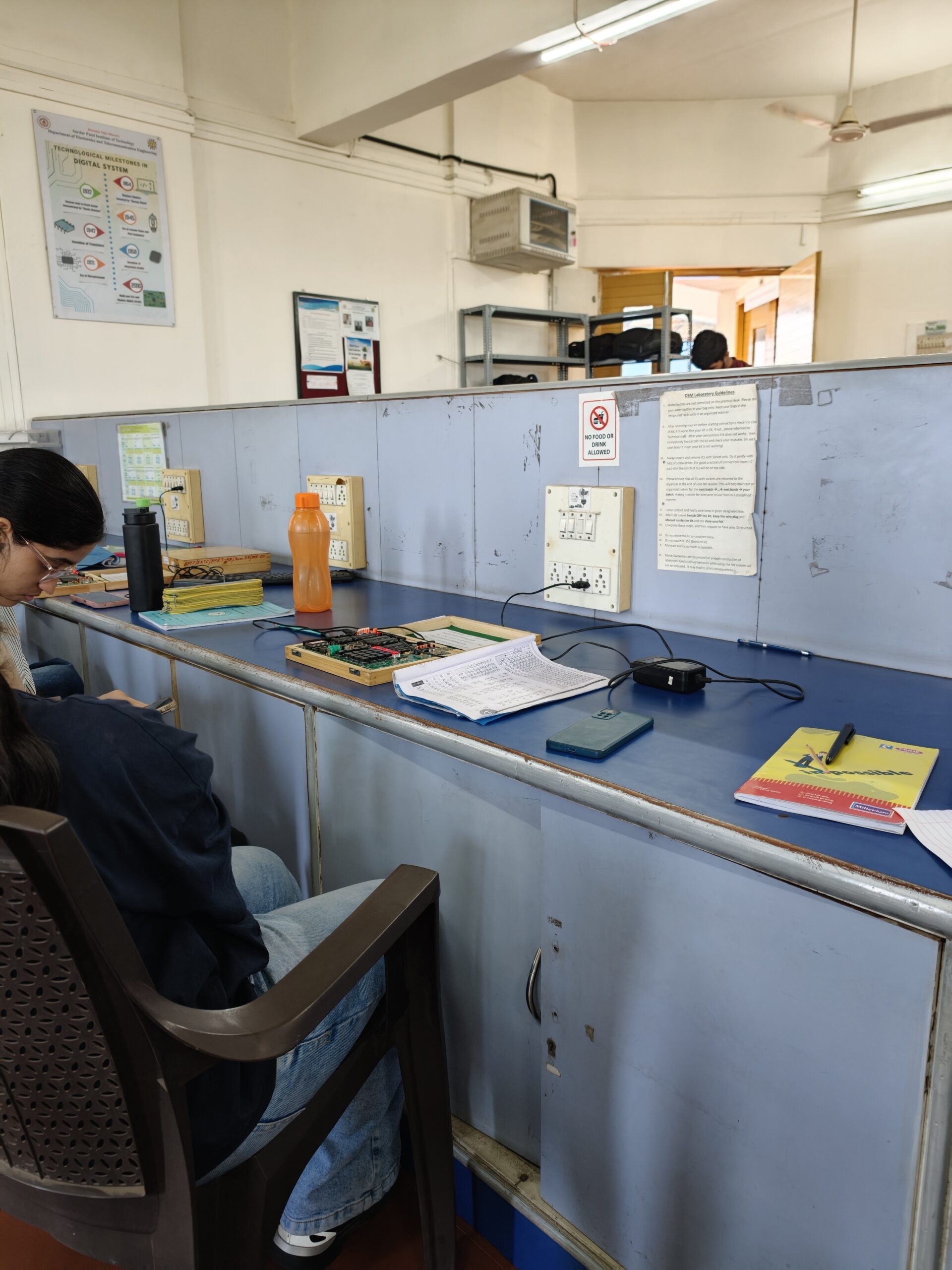
Digital Systems Lab
List of Experiments:
- Verification of Logic Gates
- Design and Implementation of Half Adder, Half Subtractor, Full Adder and Full Subtractor using Logic gates
- Multiplexer and Demultiplexer
- Comparator Implementation
- Flip-Flop Circuits (SR, JK, D, T Flip-Flops)
- Counter using JK Flip-Flops and Asynchronous Counters
- Ring Counter and Twisted Ring Counter
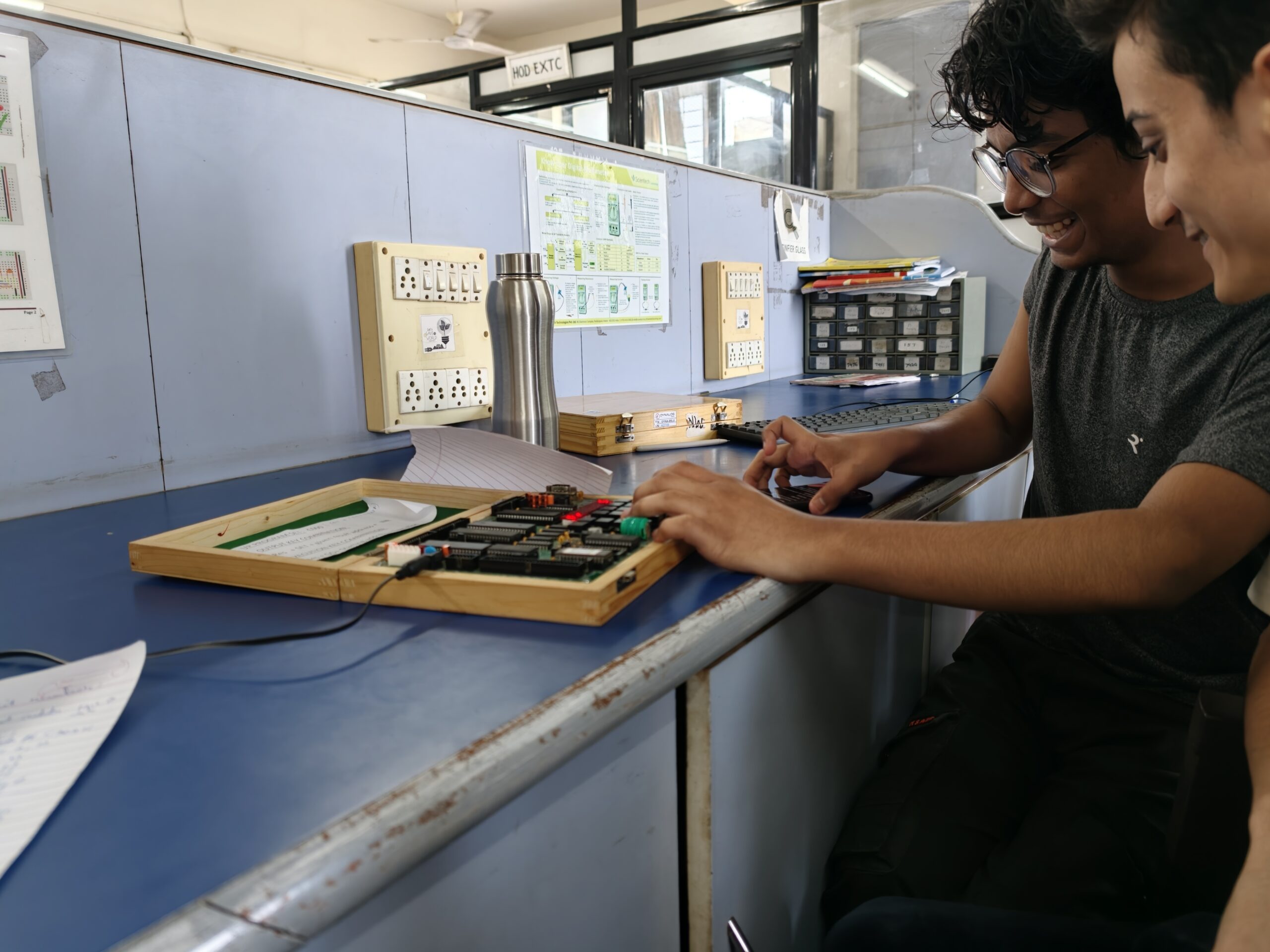
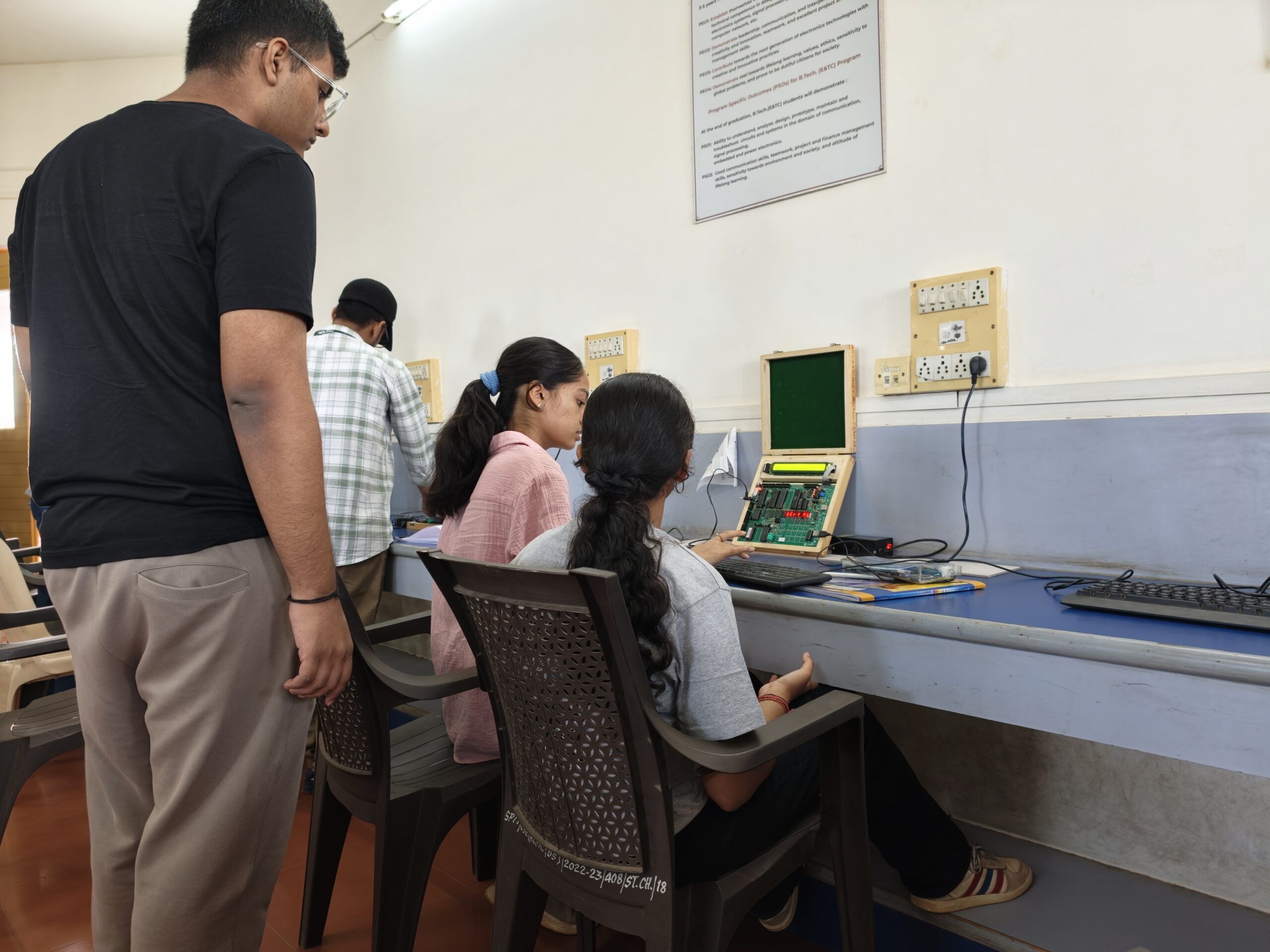
- Addition and Subtraction of Two 8-bit and 16-bit Numbers using 8085 microprocessor kit
- Array addition of ten 8-bit numbers using 8085 microprocessor kit
- Array Transfer from one memory location to other on 8085 kit and simulator
Instruments and Equipment:
- All relevant logic gate ICs
- 74151
- 7485
- 7476
- 7490
- 74194
- Microprocessor kit (2 types)
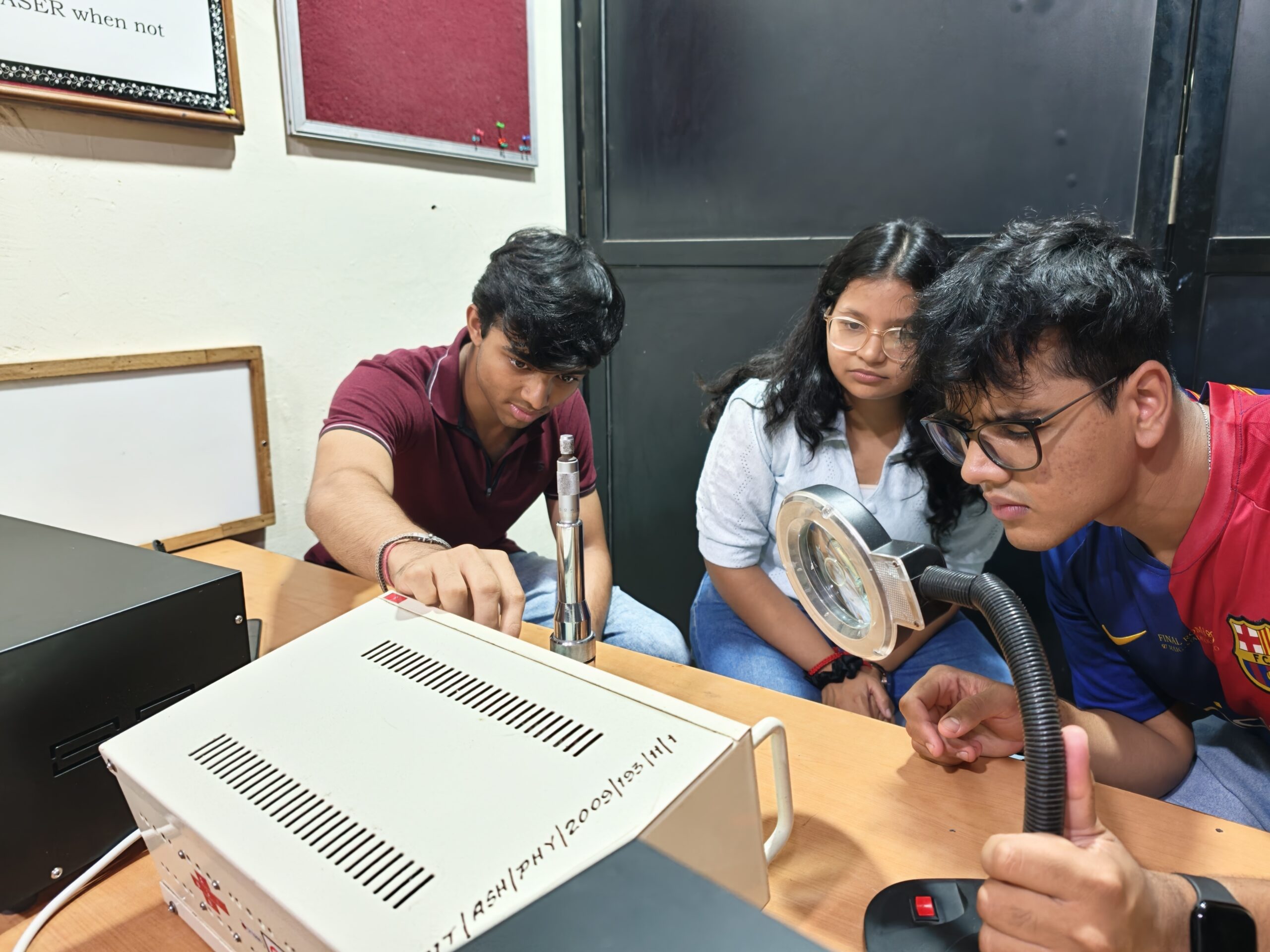
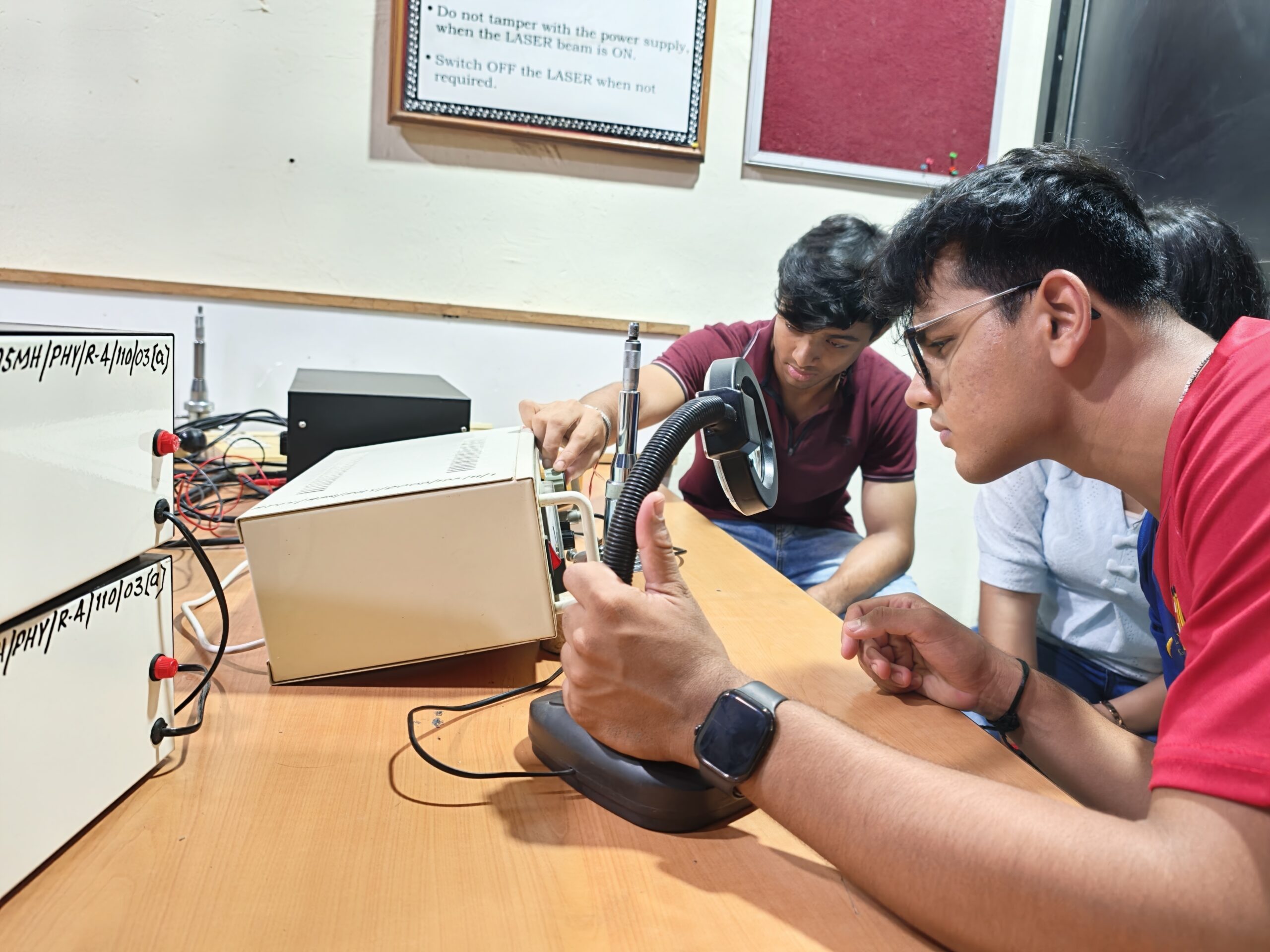
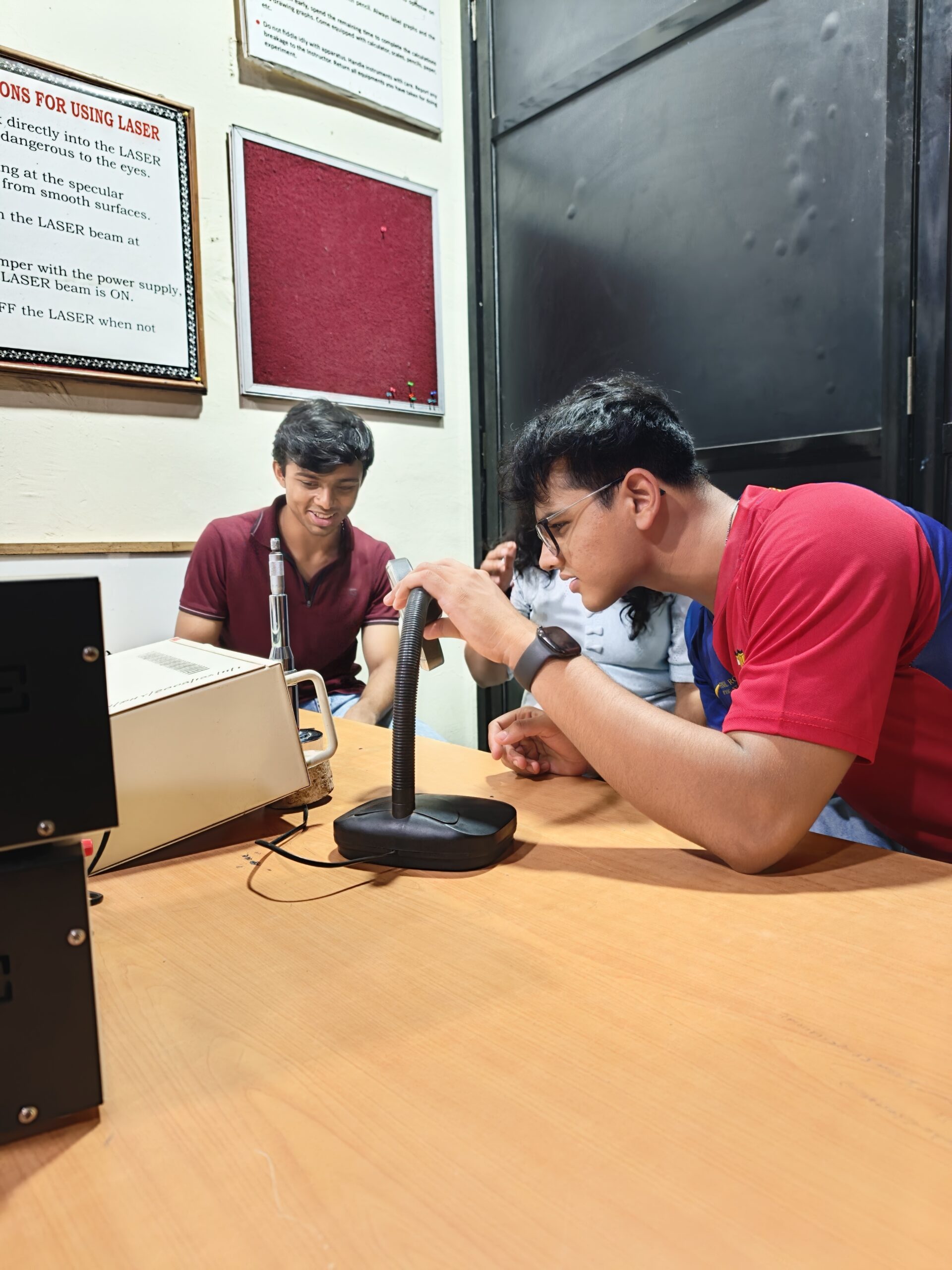
Engineering Physics Lab:
List of Experiments:
- Determine the velocity of ultrasonic waves in liquid using Ultrasonic interferometer multifrequency model F-80X
- Determine the concentration of charge carriers using the Hall Effect training system.
- Determine Planck’s constant using a photo vacuum tube model.
- Determine the energy band gap using Four probe Method Kit.
- Determine the Radius of curvature of a plano convex lens using Newton’s Rings Apparatus.
- Determine the grating element and number of lines on a plane diffraction grating using Diode Laser.
- Determine the wavelength of spectral lines of a mercury source using Spectrometer and plane diffraction grating.
- Study the I-V Characteristics of Zener Diode under forward and reverse biased mode.
Instruments and Equipment:
- Lab Oven MIC-165 – Quantity 1
- Hot plate round – Quantity 4
- Heating Mental – Quantity 2
- L.G. Refrigerator (A-80) 205 KLG5ADG. Chasisi no. 202 NRKA 0893, 190 Ltr, 5 Star rating – Quantity 1
- Digital Analytical Balance – Quantity 1
- Conductivity meter, Microcontrolled based with cells (1.0CC to 0.1CC)and temperature probe – Quantity 1
- Magnetic stirrer to mix watery liquid provided with soft start and restart facility speed upto 1000 RPM. Provided with S.S. Top and teflon magnetic bit. Capcity 500 ml Size 100 X 125 X 60 mmHt. HSN code 84798200 – Quantity 8
- Digital pH meter with electrode and with Instruction mannual – Quantity 4
- Potentiometer Digital EQ-602 – Quantity 4
- pH cum conductivity meter EQ-635 – Quantity 4
- Colorimeter Digital EQ 650 – Quantity 4